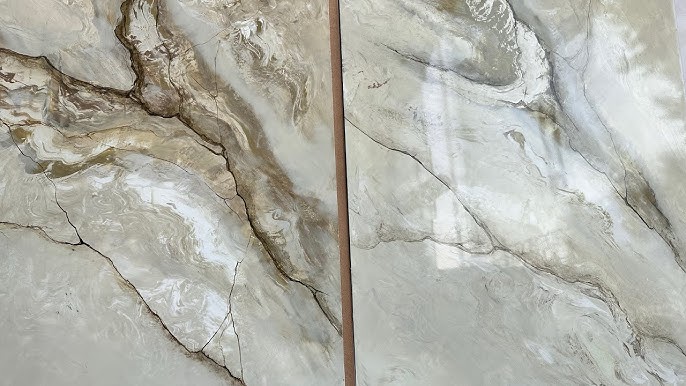
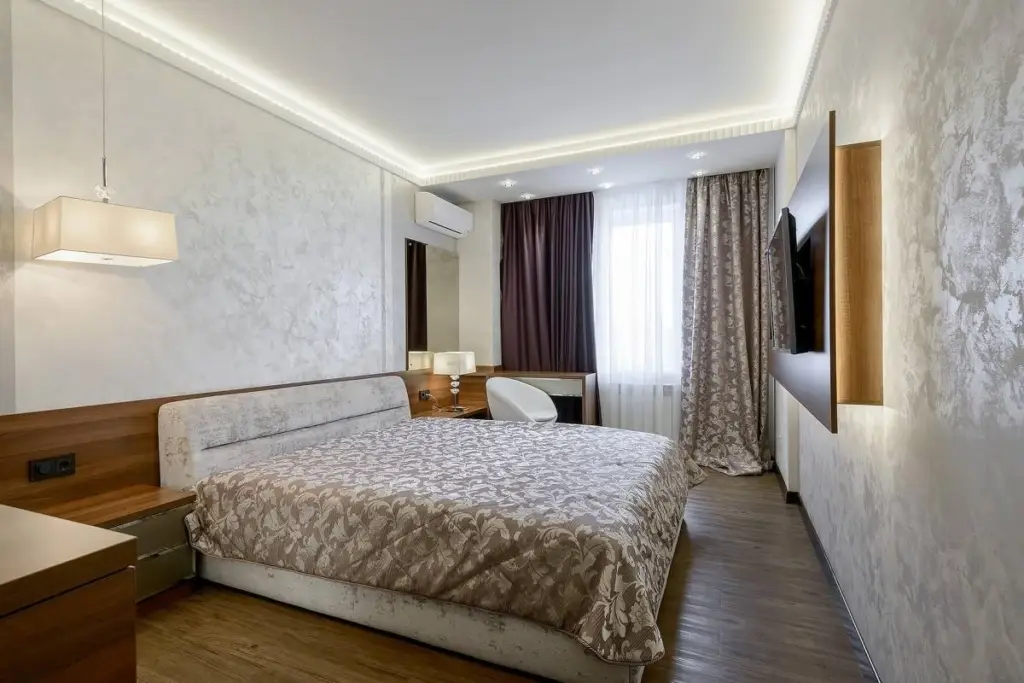
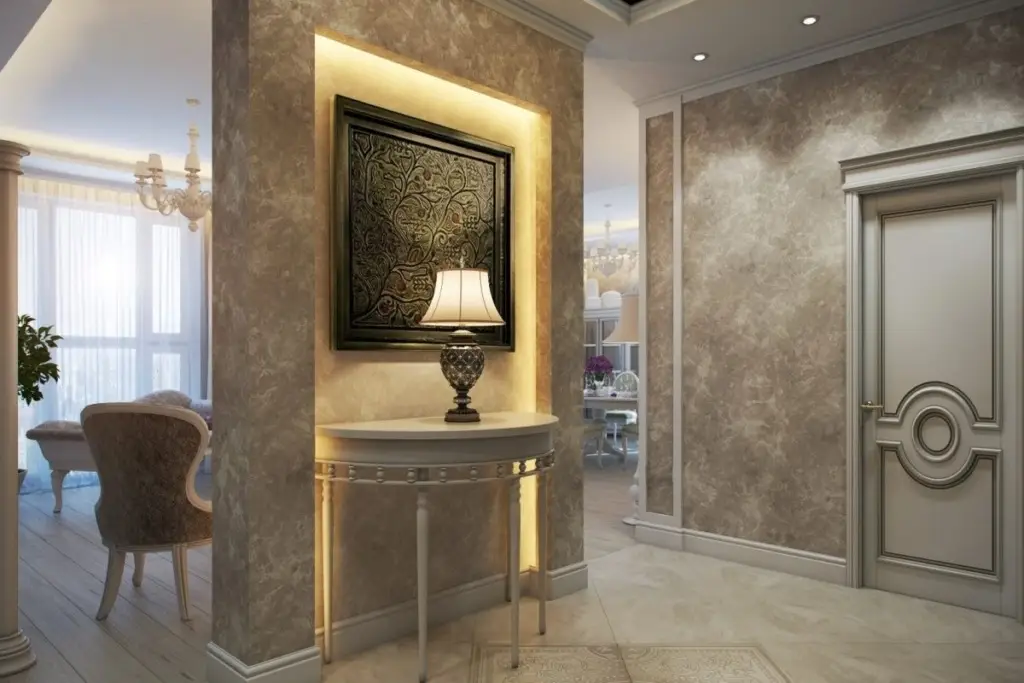
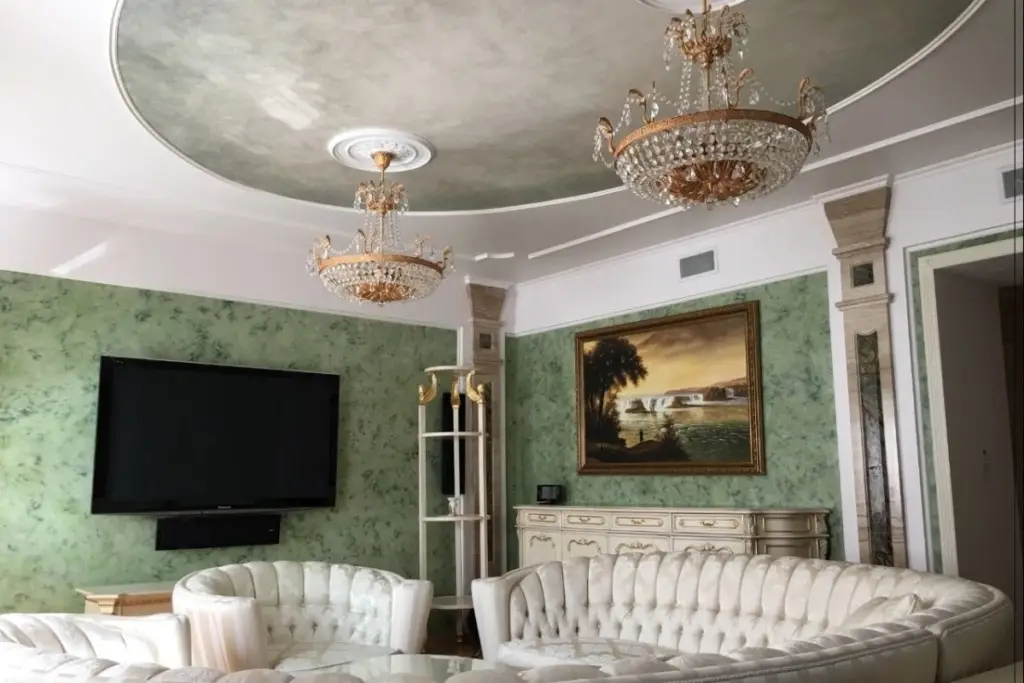
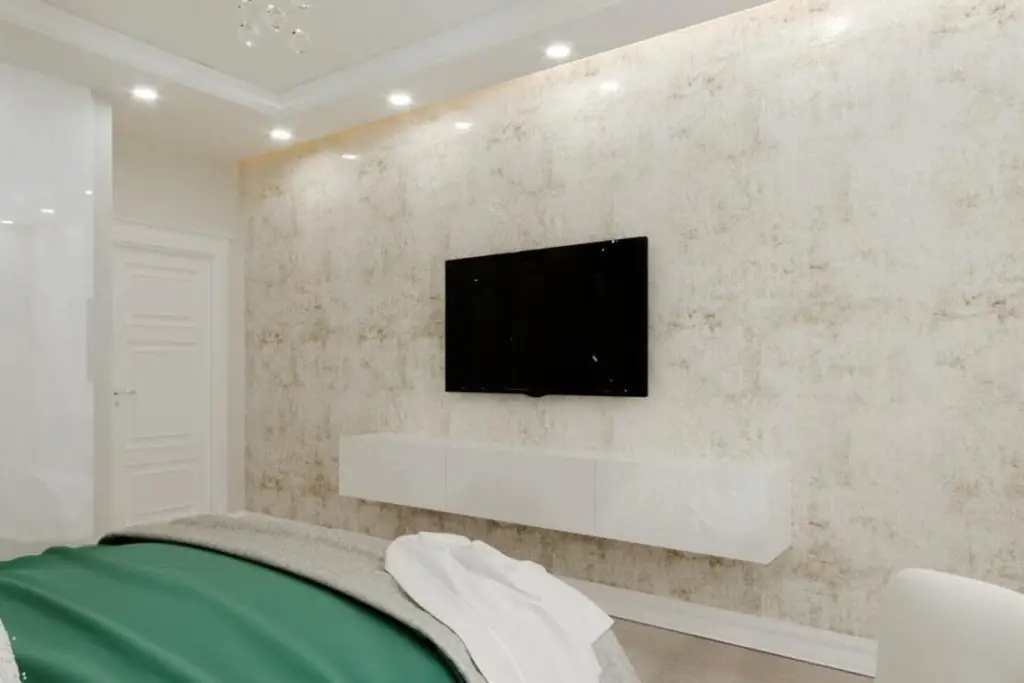
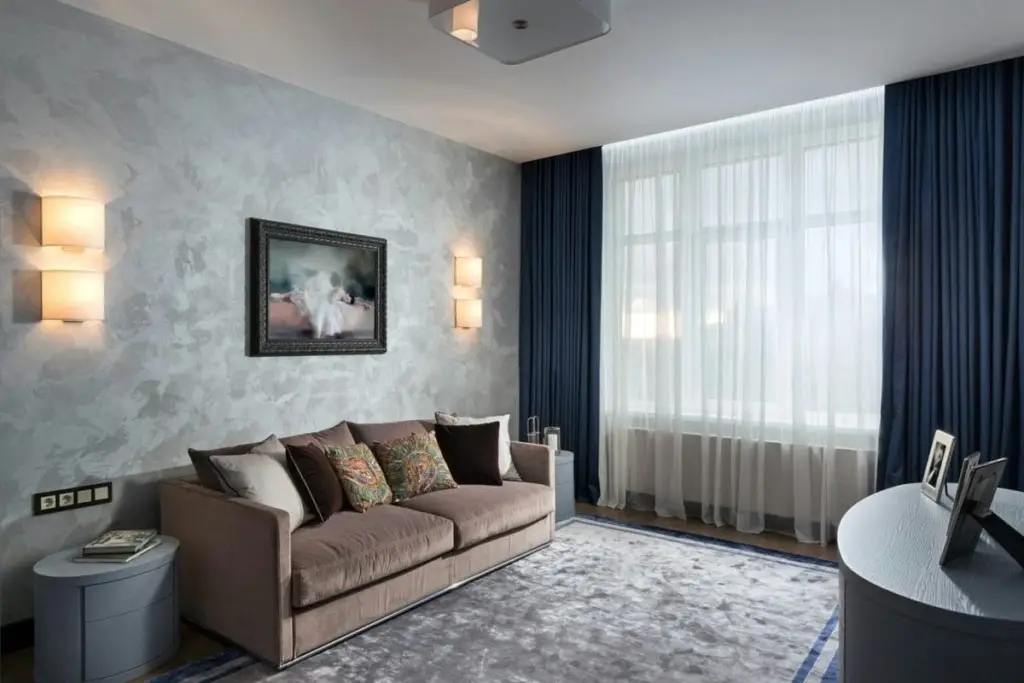
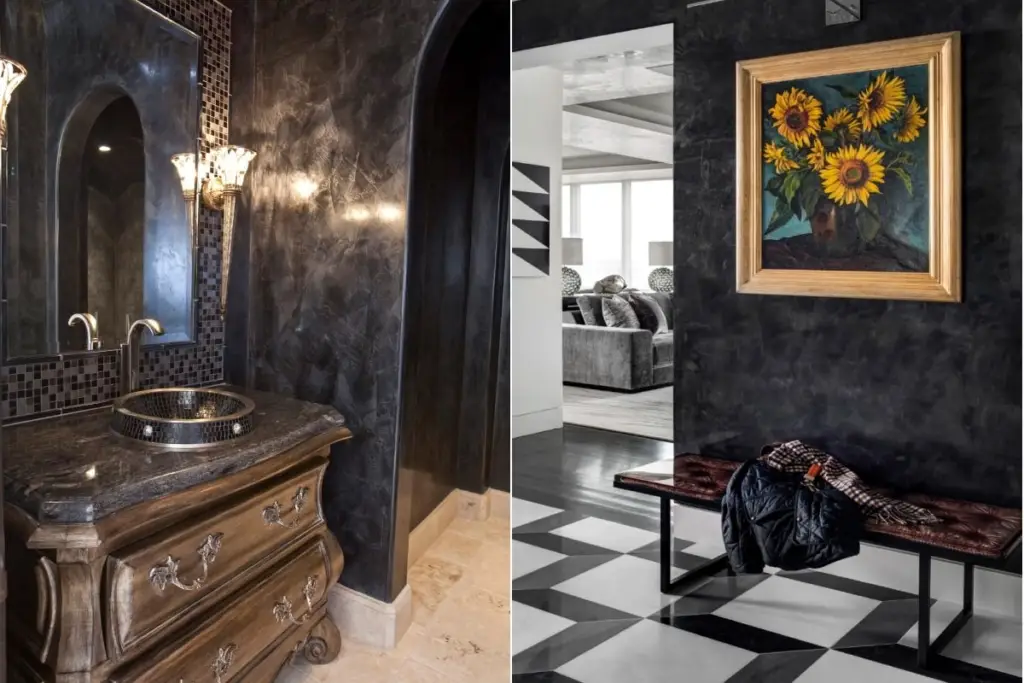
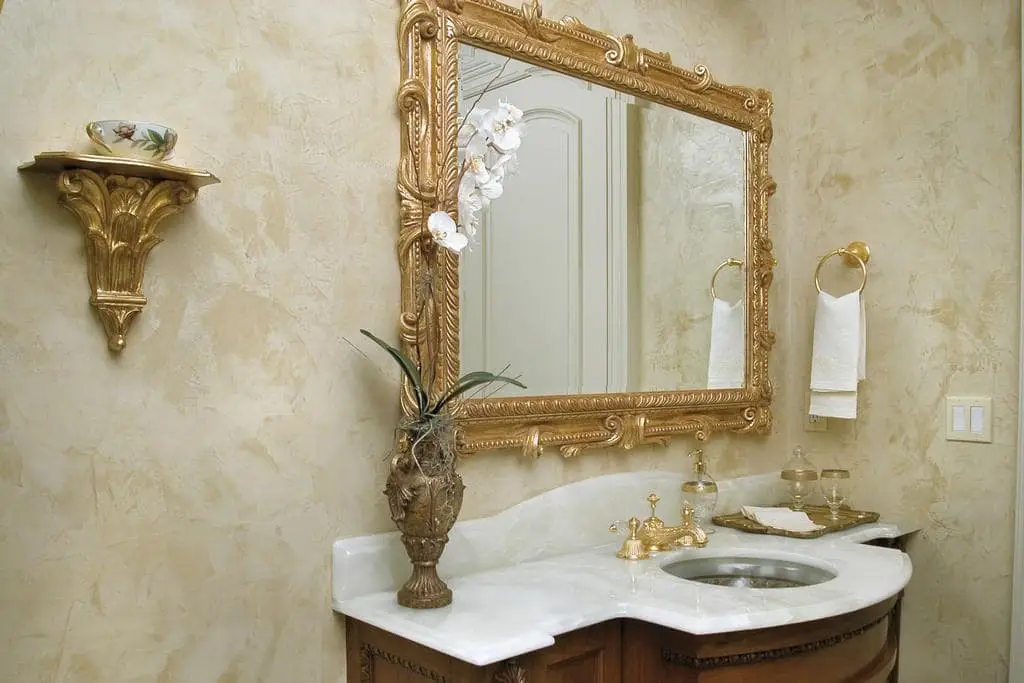
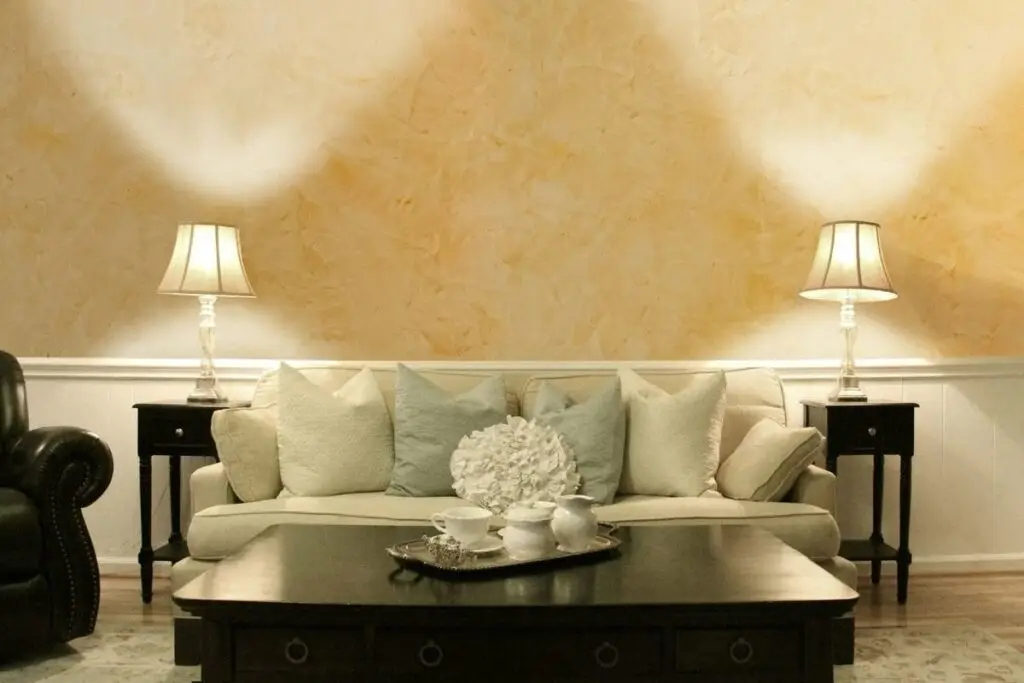
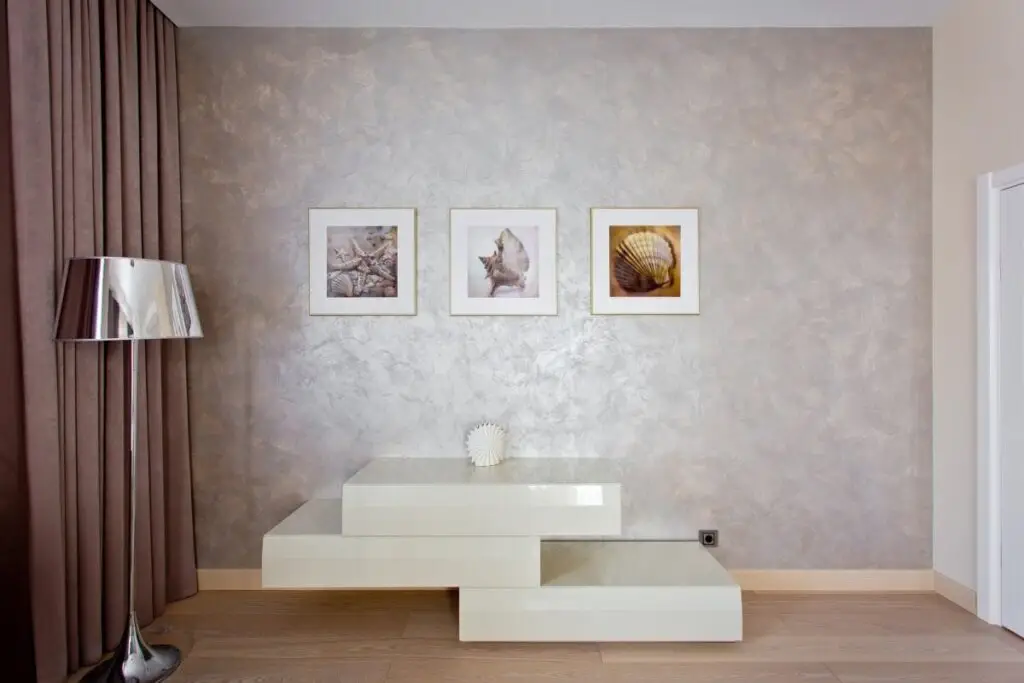
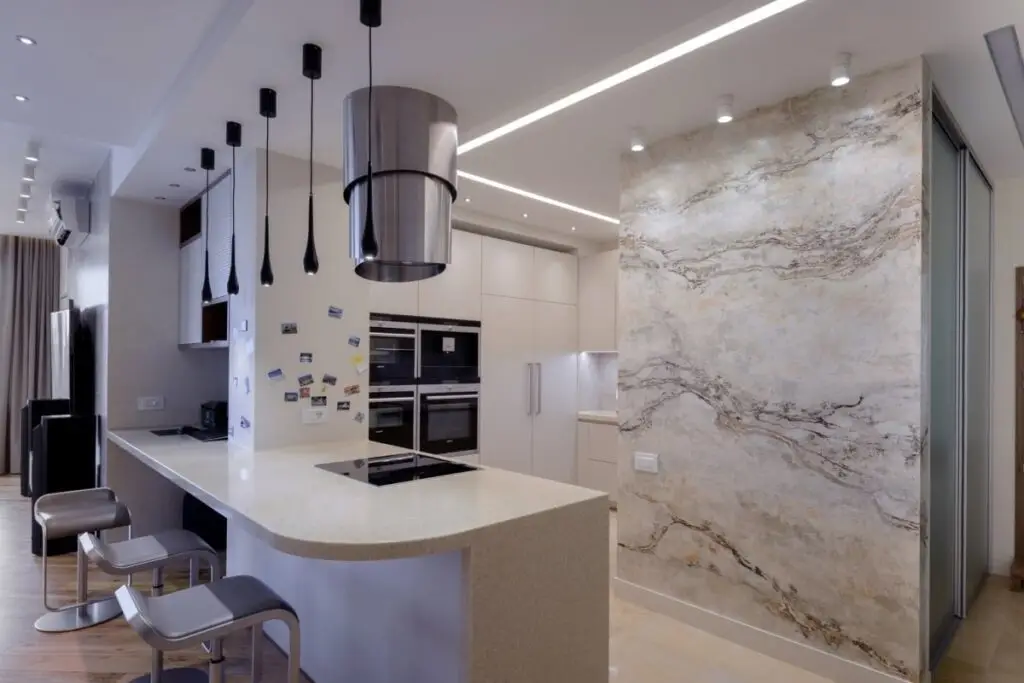
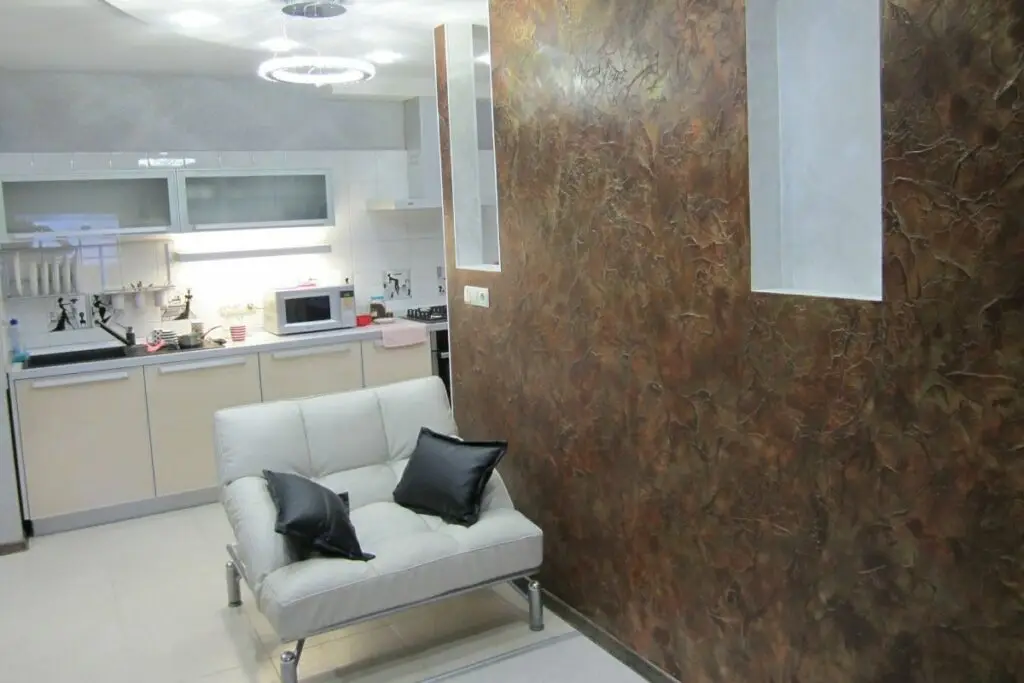
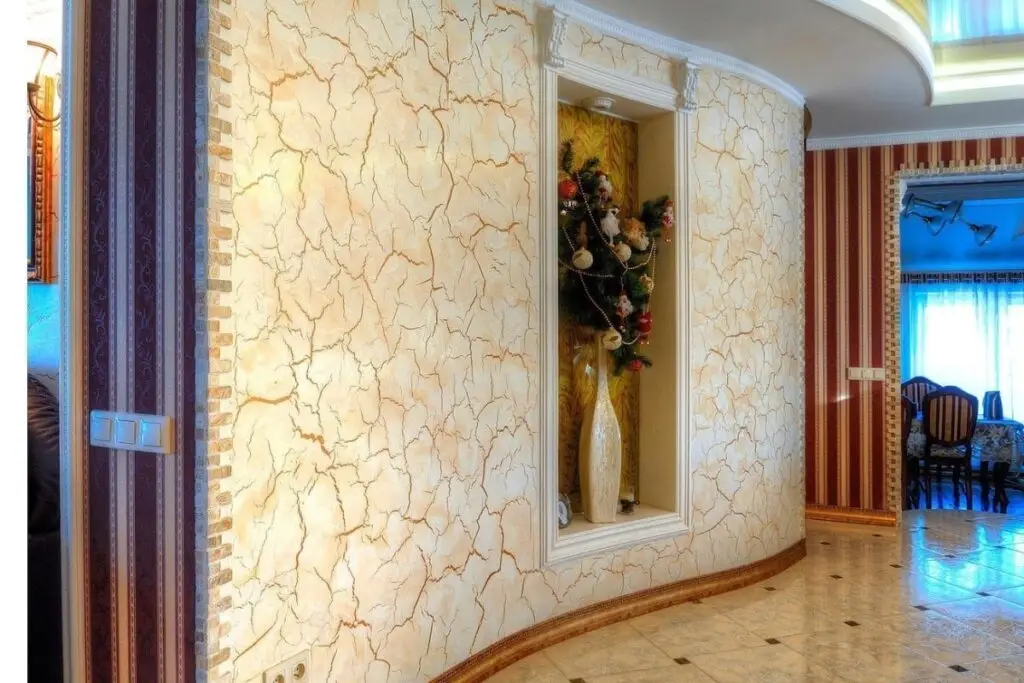
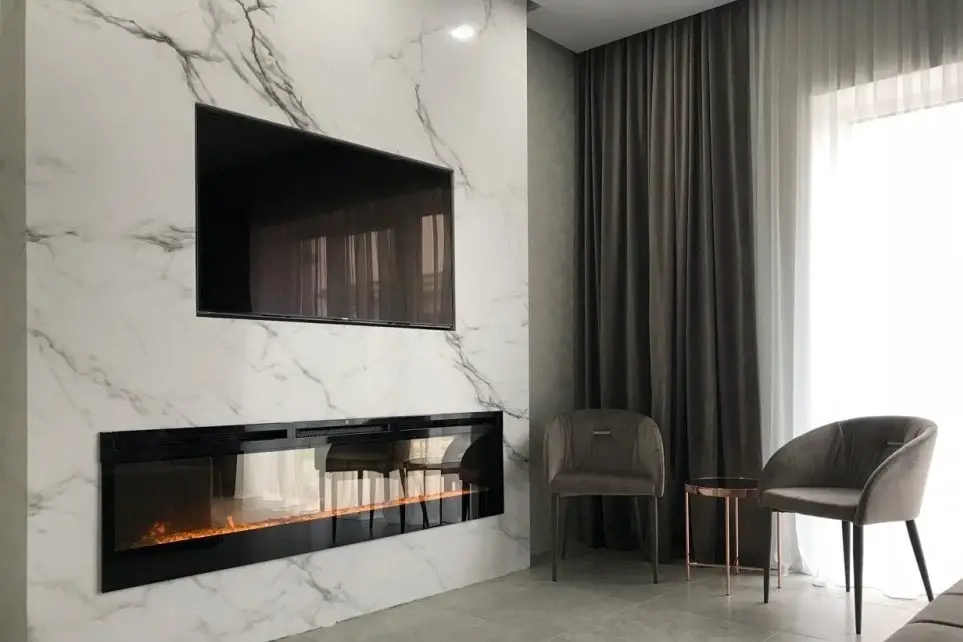
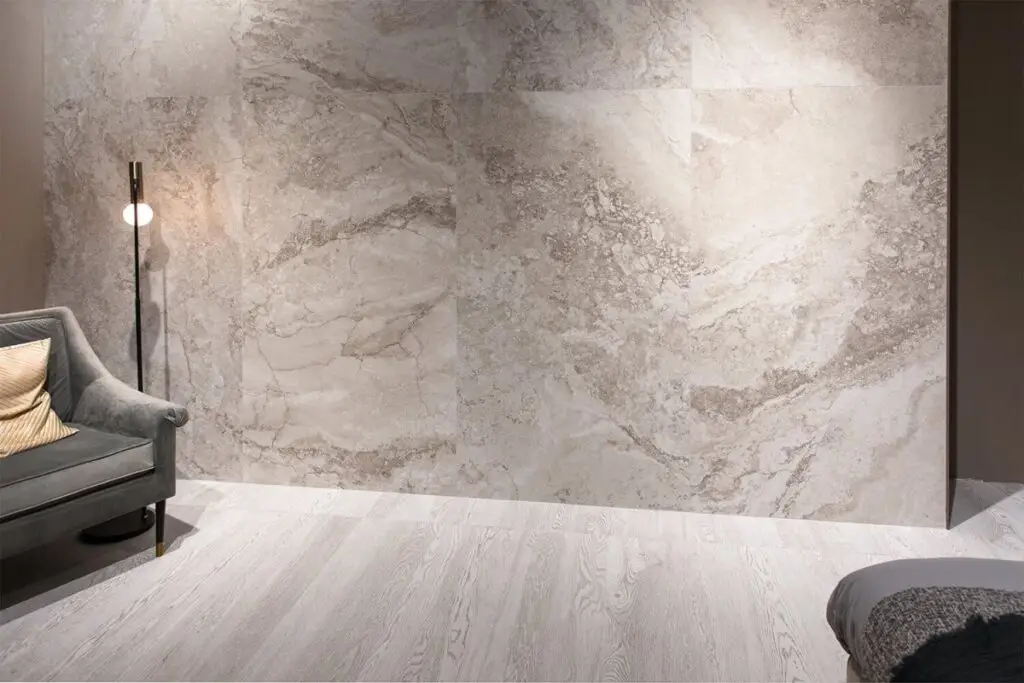
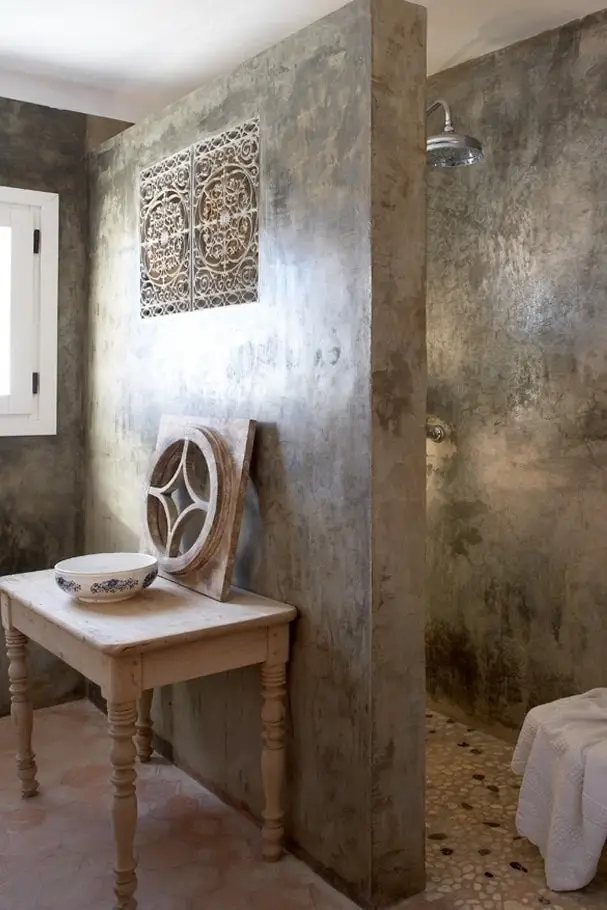
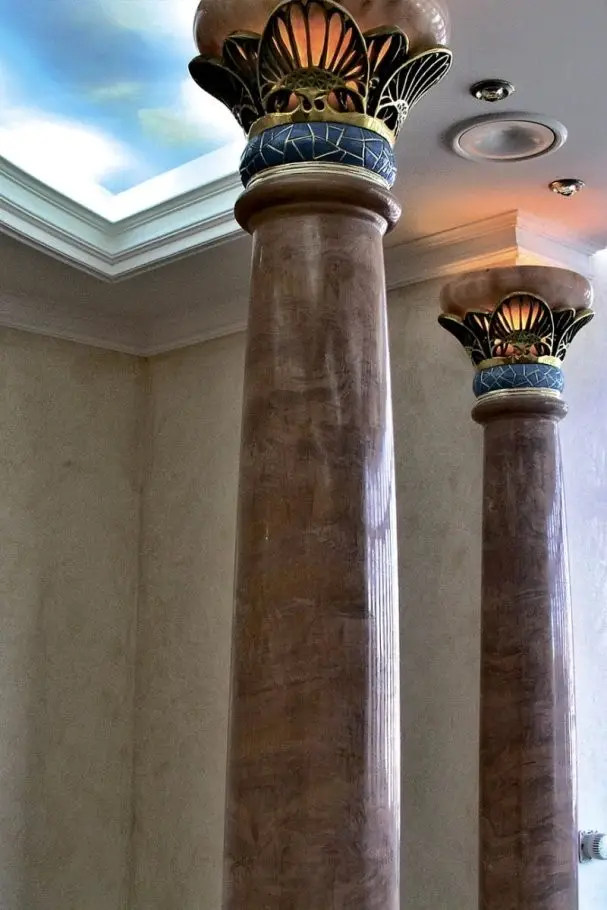
The basis for creating the coating is the application of 10-12 layers, each of which differs from the previous one by half a tone. This allows you to achieve the effect of valuable iridescent Carrara marble. This method is one of the most expensive and complex. This type of Venetian plaster is used in the interior of living rooms, bedrooms, offices, or other rooms.
The special composition and application technique using a thin tool help to achieve a textured finish with veins. This type of Venetian plaster looks very realistic.
Imitates natural marble, smooth surfaces, natural stone. Creates a warm and rich finish reminiscent of traditional Italian plaster. Used for wall finishing, creating an effect of depth and relief. Suitable for creating both classic and modern interiors.
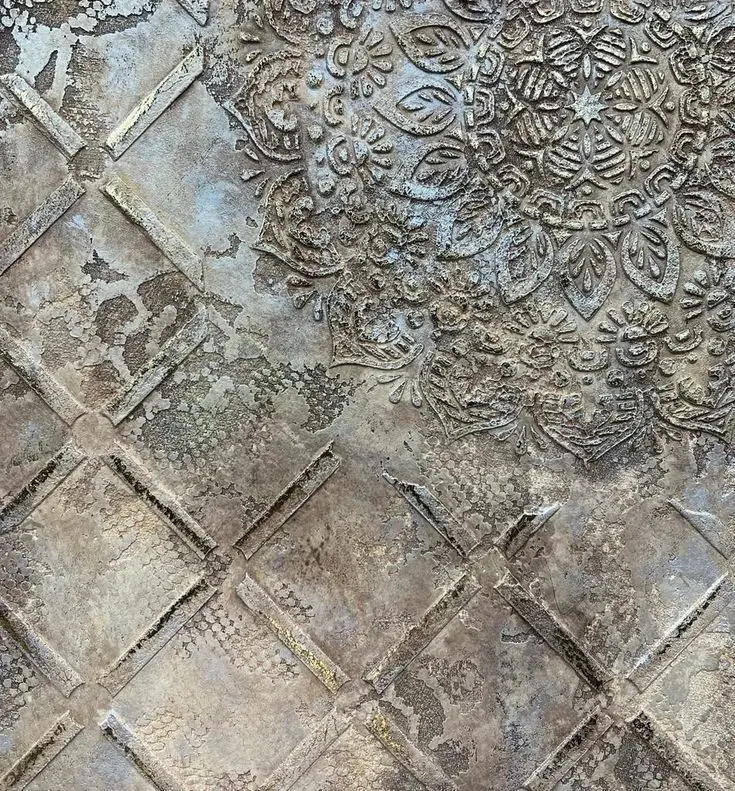
One of the most interesting ways to use decorative plaster is with stencils. They can be used to create original patterns and designs that will give your interior a unique look. Using stencils opens up a world of possibilities, from simple geometric patterns to complex artistic compositions.
Venetian plaster can be used for interior decoration in various rooms. Its properties allow it to be used on walls in rooms with high humidity and temperature fluctuations.
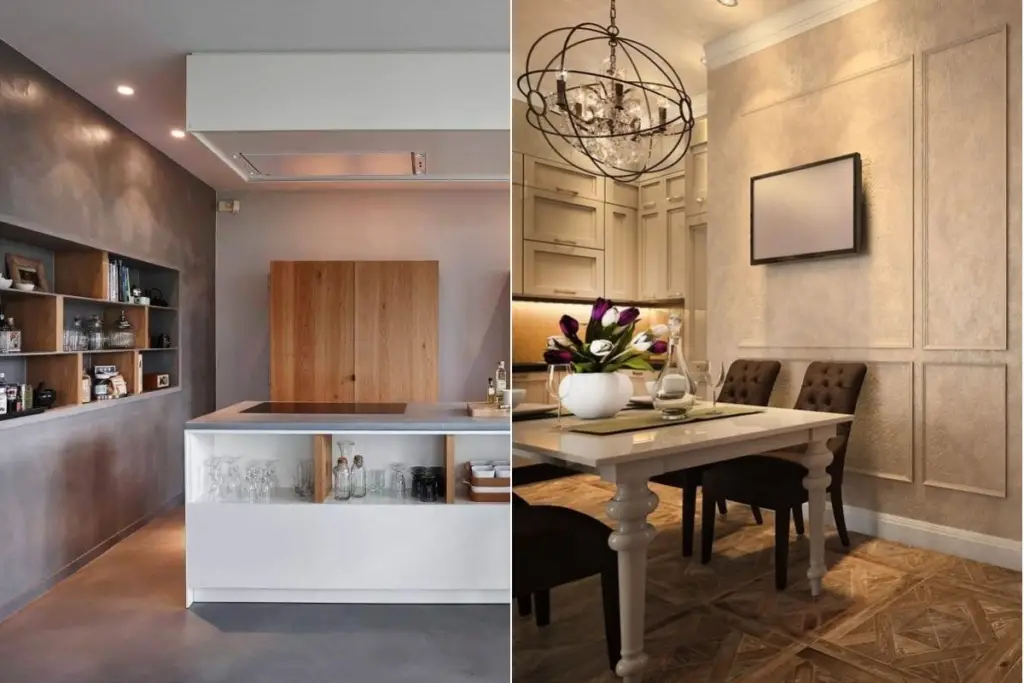
Venetian plaster in the kitchen creates a durable, moisture-resistant coating. It does not absorb odors. The wall is easy to wash, so the coating will last a long time. It is not recommended to use Venetian plaster on walls near the sink and stove. In such areas, it is better to use a tile backsplash.
Venetian plaster finish in the kitchen
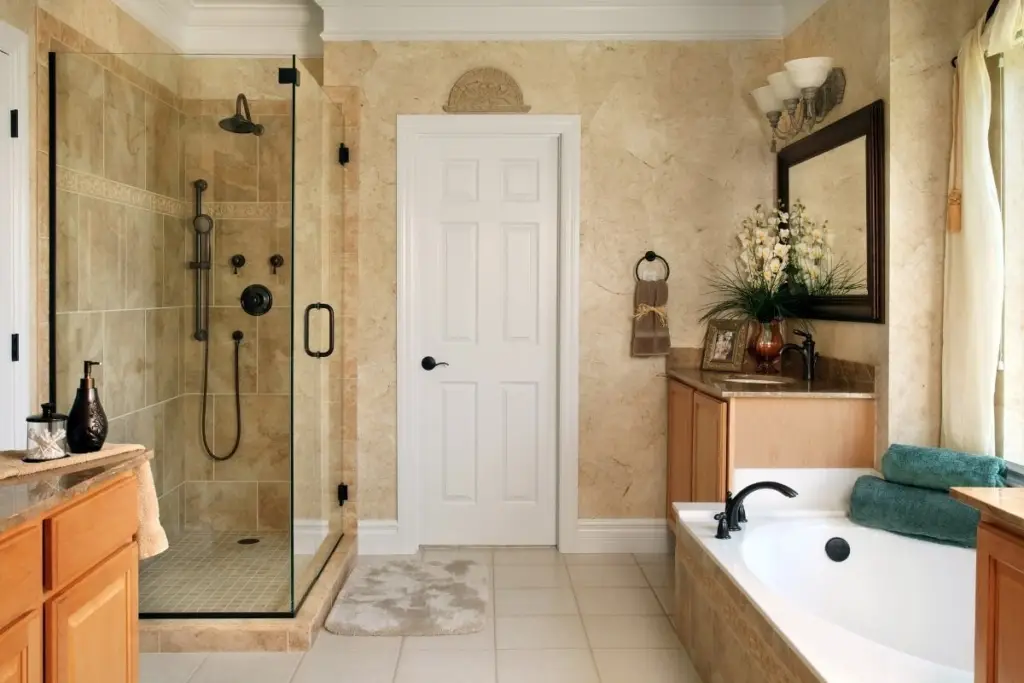
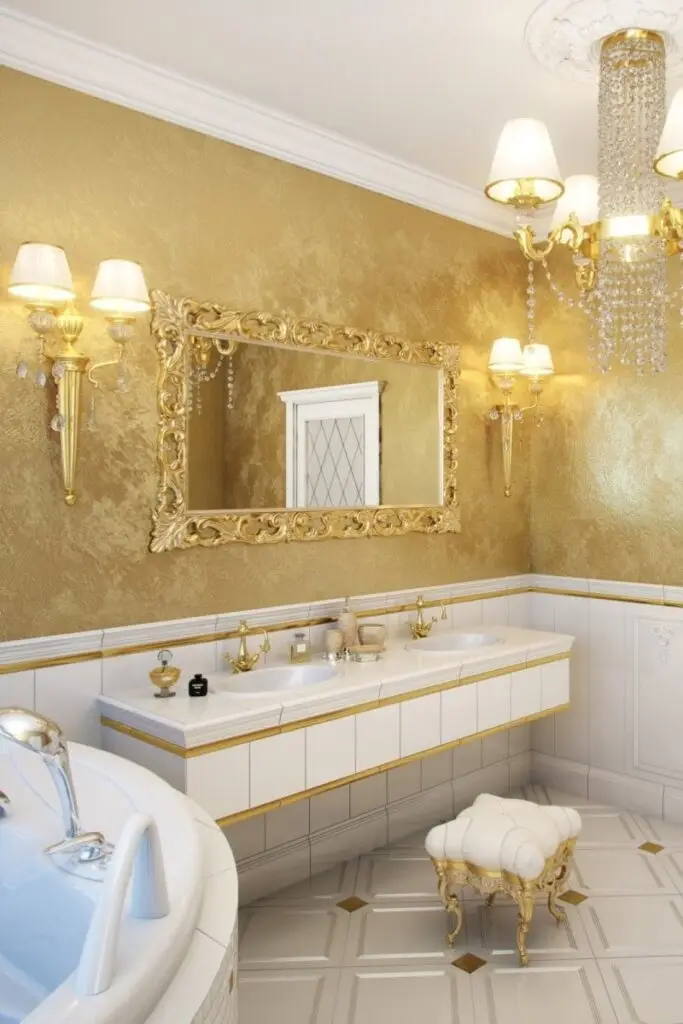
For bathroom decoration, it is better to choose smooth plaster texture. If there are irregularities on the walls, mold may appear in conditions of high humidity. To protect the wall, synthetic wax, varnish, or enamel is applied to the plaster surface.
Venetian plaster finish in the bathroom
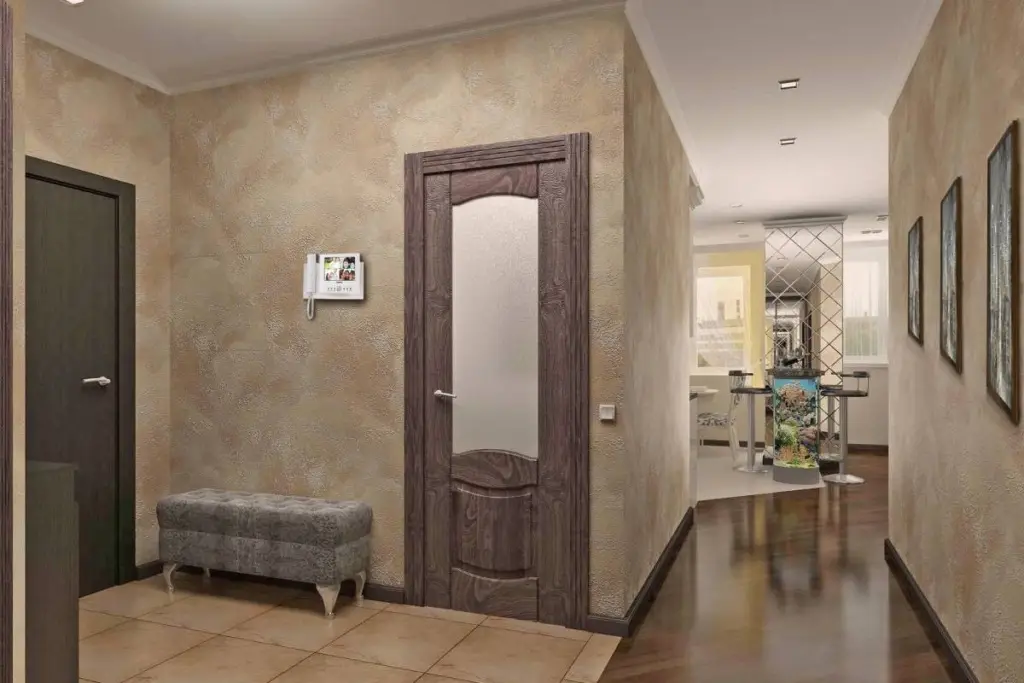
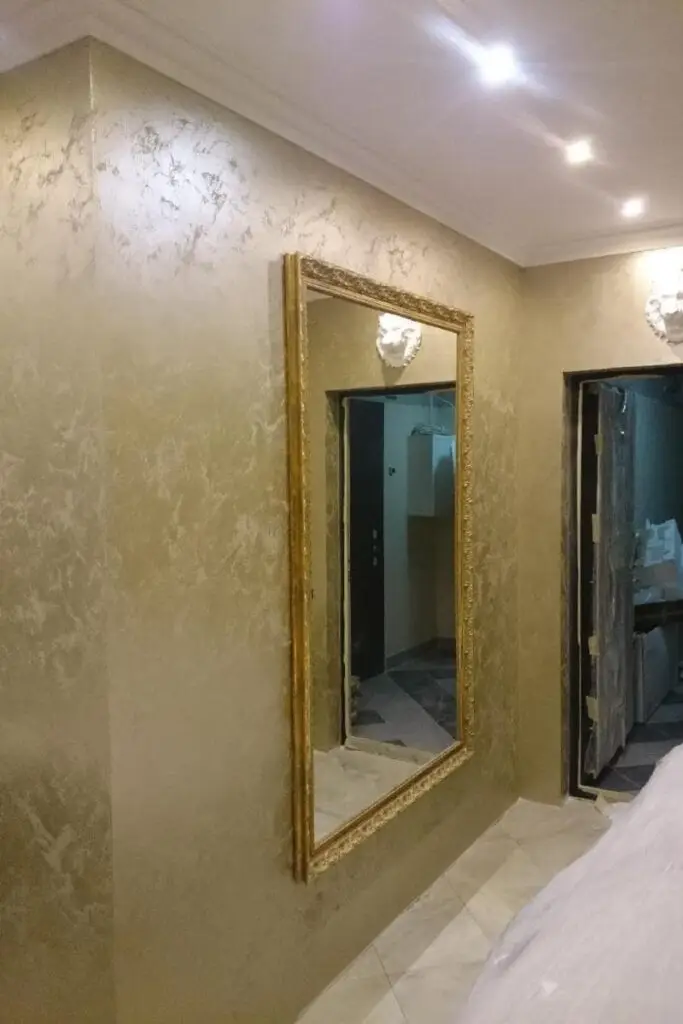
Venetian plaster is very durable, so it can be used in the hallway. A matte or glossy texture is suitable for this purpose. It is desirable that its shade matches the design of other rooms in the apartment.
Venetian plaster in the hallway interior
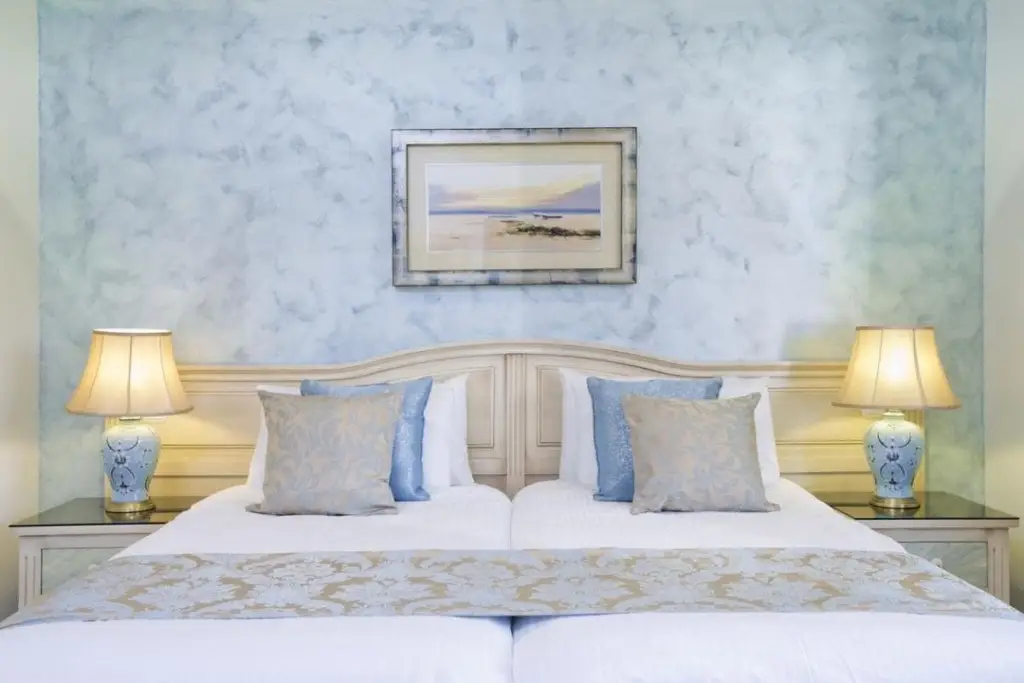
In the bedroom, Venetian plaster creates a cozy atmosphere and helps you relax. It is best to choose calm, neutral shades for this purpose. If the room has low ceilings, a light finish is best. Dark colors are only suitable for spacious rooms with high ceilings.
When choosing the composition of the plaster, texture, and pattern of the coating, the characteristics of the room and the style of the apartment’s interior are taken into account.
Thanks to the large amount of coloring pigments, decorative plaster can have any shade. It is chosen taking into account the geometry of the room and the style of the interior. The intensity of the color depends on the amount of pigment added. Most often, Venetian plaster has a natural stone shade: yellow, brown, gray, green.
Bright colors are best used in spacious rooms. In small rooms, they can look aggressive. Light shades are better suited for small areas.
Classic white, black, and gray colors are suitable for different rooms. They can be combined with other shades to create a unique effect. White flooring creates the effect of natural marble. White makes a room appear more spacious and brighter. It is suitable for rooms of various shapes with any ceiling height.
Gray Venetian plaster creates an imitation of natural stone. Gray is most often used in combination with bright colors. Gray Venetian plaster with a pearlescent sheen looks particularly appealing.
To create a luxurious, aristocratic interior, you can use black Venetian plaster. To prevent the room from looking dark and gloomy, it is best to paint only one wall black. This color can be combined with any other shades. It suits almost all design styles.
Venetian plaster can be used to create a smooth, seamless wall surface. This type of coating resembles marble or stone. It can be used to imitate wood and other natural materials.
Advantages of Venetian plaster
1. Beautiful, smooth wall covering.
2. A variety of colors and textures, you can choose an option for almost any room.
3. Natural, safe composition. The mixture does not cause allergies, has no odor, and does not contain toxic substances.
4. The mixture dries quickly.
5. Vapor permeability. Mold does not appear on Venetian plaster.
6. Easy to maintain. The coating can be washed with cleaning agents.
7. Durability. The plaster is designed for at least 20 years of use. Unlike wallpaper, Venetian plaster is not susceptible to mechanical damage.
One of the disadvantages of Venetian plaster is its high price. Another drawback is that it can be difficult to apply, as it requires careful surface leveling and strict adherence to the technology.
Types of Venetian plaster
Венецианская штукатурка делится на категории в зависимости от вида покрытия, состава и способа нанесения.
Классическая штукатурка. Декоративную венецианскую штукатурку наносят в несколько слоев для прочного и долговечного покрытия.
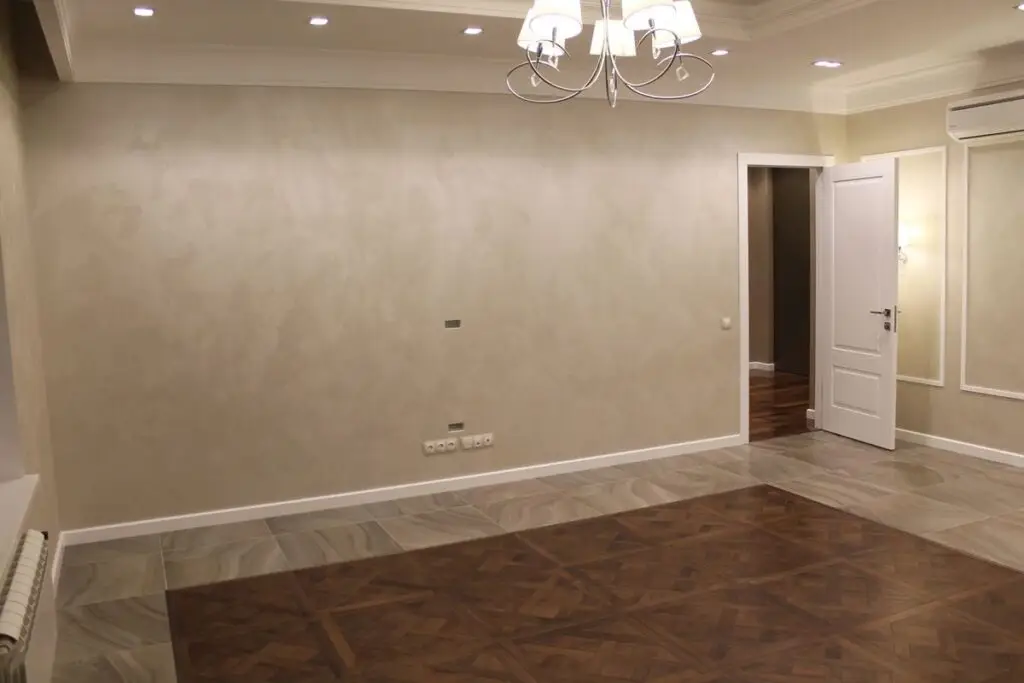
Pearlescent coating. The plaster contains light-reflecting particles that give it a shine.
Venetian plaster imitating marble. To achieve this effect, several layers of the mixture are applied. The composition is applied in different directions, resulting in a resemblance to natural marble.
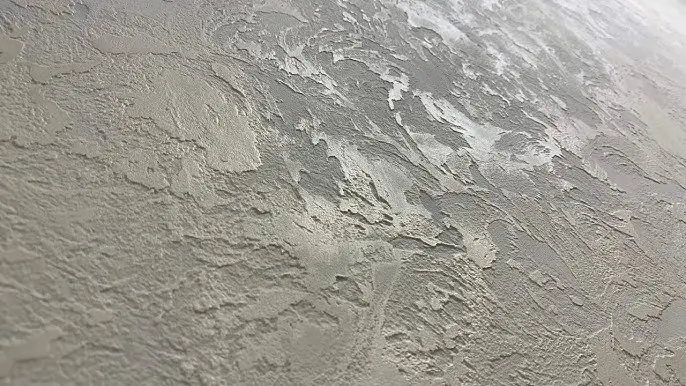
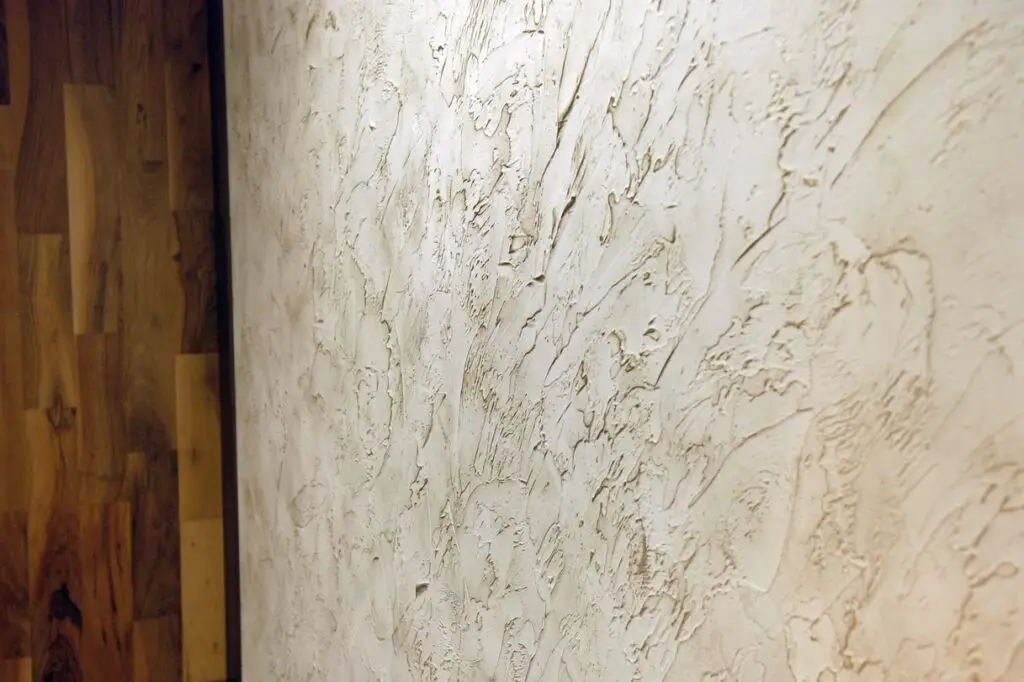
Textured plaster. It can be used to create imitations of wood, stone, leather, or other natural materials. Application is highly complex. The quality of the coating largely depends on the skill of the craftsman.
The appearance of the coating largely depends on the grind of the plaster. To create an accent on a separate section of the wall or ceiling, you can use plaster of the same color with different grain sizes.
The composition can be applied in several ways to achieve a variety of effects.
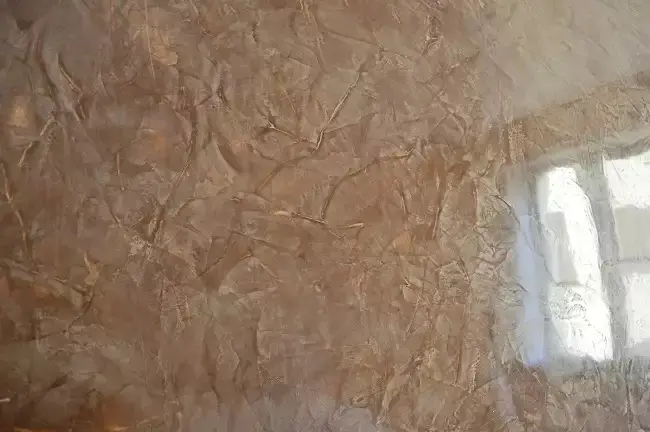
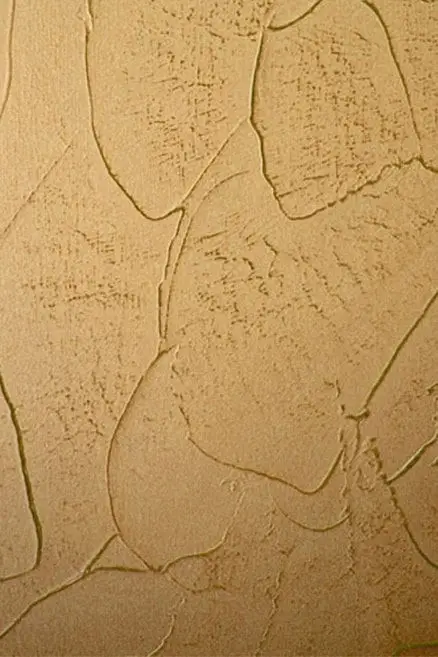
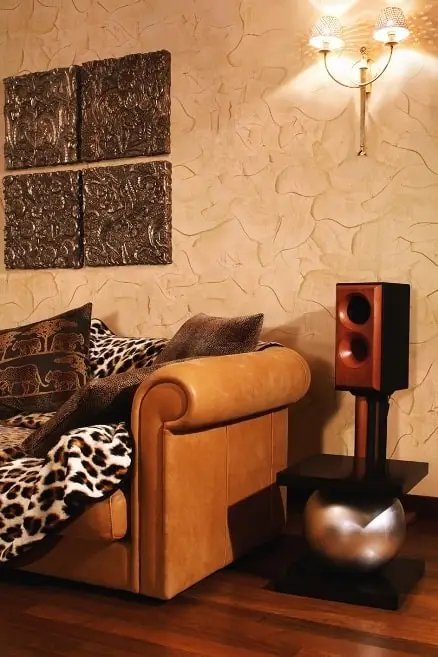
Craquelure. A coating styled to look antique. After covering the wall with plaster, a special crackle varnish is applied to it. It shrinks after drying, forming cracks on the surface of the plaster.
Carrara marble. To create this effect, 10-12 layers of plaster are used, each differing from the other by half a tone.
Veneto. Semi-matt marble surface.
Imperiale. A golden pigment is added to the plaster. It shimmers in the light, creating a luxurious and elegant finish. Suitable for classic, baroque, and art deco interiors.
Marbello. The coating has a matte surface with small reflective areas. Several shades of plaster of the same color are used to create this effect.
Marseille wax. Using wax allows you to create an original visual effect and emphasize the depth of the texture. In addition, the wax coating increases the moisture resistance of the plaster.
Wet silk. Outwardly, this type of plaster resembles stretched fabric. To create this effect, a composition with large granules is used.
Treviñano. Imitation of travertine rock pattern. Achieved by applying several layers of Venetian plaster in different colors.
Venetian plaster offers many opportunities to create a variety of effects. The appearance of the coating largely depends on the professionalism of the craftsman performing the finishing work.